


How to Reduce Noise with the Right Flooring
If you’ve ever heard footsteps echoing from upstairs, chairs scraping across the floor, or sound travelling from one room to another, you’ll already know how much flooring influences noise in the home.
It’s one of those things people don’t always think about when choosing a new floor, until they’re living with it.
At Fineline Flooring, we often help homeowners who love the look of their flooring, but wish it felt a little quieter underfoot. The good news is that with the right approach, you can create a home that feels not just stylish, but noticeably calmer too.
It’s not just the floor, it’s what’s underneath
When it comes to noise, what sits beneath your flooring is just as important as the surface itself.
In homes with concrete subfloors, typically on ground floors or in newer builds, sound doesn’t tend to travel between levels as easily. However, concrete can still cause sound to bounce around within the room, especially when paired with harder flooring finishes.
Upstairs is where things often change. Many homes have timber floorboards, and these naturally allow more movement and vibration. That’s why footsteps, creaks and general activity can often be heard from below. It’s not necessarily the flooring on top causing the issue, it’s the structure beneath it.
This is where professional advice really matters. By understanding how your home is built, the right flooring (and preparation) can make a noticeable difference.
Why subfloor preparation makes all the difference
One of the most overlooked aspects of any flooring project is the subfloor preparation, yet it plays a huge role in both durability and noise control.
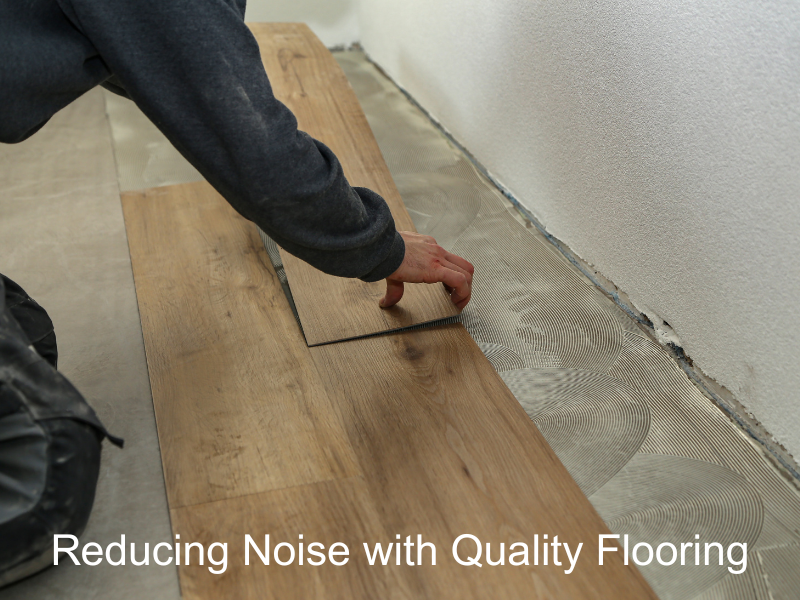
A floor that isn’t properly prepared can allow movement, which leads to vibrations, and ultimately more noise. At Fineline Flooring, we always assess the condition of the existing floor before installation, checking for uneven areas, movement or anything that could affect performance.
Taking the time to properly prepare the subfloor helps create a solid, stable base. The result? A floor that not only looks better, but also feels quieter and more comfortable underfoot.
Underfloor heating: comfort meets consideration
Underfloor heating is becoming increasingly popular, especially in modern homes and renovations. It adds a lovely sense of warmth, but it does influence your flooring choices.
Luxury vinyl flooring (LVT) works particularly well with underfloor heating because it allows heat to pass through efficiently while still offering a softer feel than traditional hard surfaces. Carpet can also be used, provided the right combination of carpet and underlay is selected so that heat can still circulate effectively.
It’s all about balance, choosing a flooring solution that delivers warmth, comfort and the right level of sound control for the space.
Choosing the right flooring for a quieter home
Different rooms naturally have different acoustic needs, and this is where thoughtful flooring choices can really improve how your home feels day to day.
In spaces like bedrooms and upstairs living areas, comfort and quiet tend to be the priority. Carpet is often the preferred choice here, not just for the softness underfoot, but because it absorbs sound rather than reflecting it. It helps reduce footsteps, muffles movement and creates a more peaceful environment, especially important in busy households.
In contrast, areas such as hallways, kitchens and open-plan living spaces need to balance durability with practicality. This is where LVT and vinyl flooring come into their own. They’re easy to maintain and highly resilient, and while they don’t absorb sound in the same way as carpet, modern products are designed to minimise noise more effectively than traditional hard flooring.
Home offices are another interesting case. With more people working from home, acoustics have become increasingly important. A carpeted floor can help reduce echo and background noise during calls, while LVT with acoustic backing can offer a practical alternative if a hard floor is preferred.
Creating balance throughout the home
In many homes, the best solution isn’t choosing one type of flooring, it’s combining them.
It’s common to see LVT used downstairs for its durability and clean, modern look, while carpet is used upstairs to create a quieter, more comfortable feel. This approach allows each room to perform exactly as it needs to, without compromise.
Even small additions like rugs, curtains and soft furnishings can make a noticeable difference, helping to soften sound and create a more balanced acoustic environment.
Why installation expertise matters
One of the biggest factors in how a floor performs, both in terms of durability and noise is how well it’s installed.
Poor fitting or inadequate preparation can lead to movement, gaps or uneven surfaces, all of which can increase noise over time. That’s why working with experienced professionals is so important.
At Fineline Flooring, we take a complete approach – from assessing your existing floors to recommending the right materials and ensuring everything is installed to the highest standard. It’s this attention to detail that makes the difference between a floor that simply looks good, and one that truly works for your home.
A quieter, more comfortable home starts with the right flooring
Flooring has a bigger impact on your home than you might expect. Beyond appearance, it influences how your space feels, sounds and functions every day.
If you’re planning a flooring upgrade, it’s worth thinking about noise as part of the decision. The right combination of materials, preparation and installation can transform not just how your home looks – but how it feels to live in.
Call Fineline Flooring on 01256 701569
Or book a free consultation at www.finelineflooring.co.uk
We’ll help you choose flooring that looks great and creates a quieter, more comfortable home.
LATEST BLOGS
- How to Reduce Noise with the Right Flooring
- Professional Healthcare Flooring Solutions – Durable, Hygienic & Built for Safety
- Marmoleum Flooring: Sustainable, Stylish & Built for Demanding Environments
- Stylish & Practical Kitchen Flooring Solutions for 2026
- Safe and Stylish Bathroom Flooring Solutions for Every Home